New MELAS Consensus: A Critical Resource for Doctors and Patients Worldwide
28 Mar, 2026
New MELAS Consensus: A Critical Resource for Doctors and Patients Worldwide
In November 2025, leading international experts gathered in Pisa, Italy, for an ERN EURO-NMD Workshop to develop a new clinical consensus on MELAS (mitochondrial encephalomyopathy with lactic acidosis and stroke-like episodes – a type of mito). This important work aims to address long-standing challenges in the diagnosis and management of this complex and life-limiting mitochondrial disease.
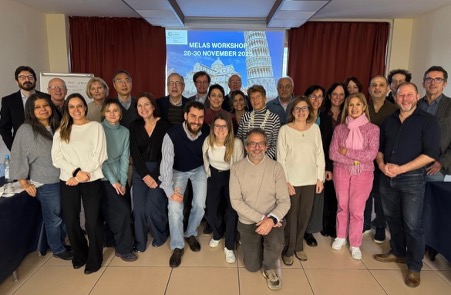
Members of the MELAS Consensus workshop November 2025
MELAS is characterised by stroke-like episodes (SLE), which can cause sudden neurological symptoms such as speech difficulties, weakness, vision loss, and seizures. These episodes are unpredictable, often recurrent, and can lead to permanent disability. Until now, a lack of internationally agreed definitions and treatment approaches has resulted in significant variation in care across countries and clinical settings.
The consensus brings together the latest evidence and expert opinion to provide clearer definitions of MELAS and SLE, alongside recommendations for managing key aspects of the disease, including neurological symptoms, epilepsy, psychiatric complications, and comorbidities. By aligning clinical understanding and approaches, the consensus represents an important step towards more consistent and effective care worldwide .
IMP, represented by Chair, Paula Morandi, played a central role in representing the international patient community, alongside Serena Massucci from Mitocon. They ensured that the lived experiences of patients and families were incorporated into discussions, highlighting real-world challenges such as delays in diagnosis, inconsistent care, lack of psychological support, and the burden on caregivers. This patient perspective is essential in shaping recommendations that are not only clinically sound but also practical and relevant to everyday life.
For patients worldwide, this work is highly significant. Standardised guidance can improve recognition of MELAS, support earlier and more accurate diagnosis, and promote more consistent management—particularly in non-specialist settings. Ultimately, this can lead to better outcomes, improved quality of life, and reduced uncertainty for patients and their families.
The full research has been submitted to the European Journal of Neurology and will be presented at EUROMIT in France in June 2026, further supporting dissemination and uptake across the international mitochondrial community.